
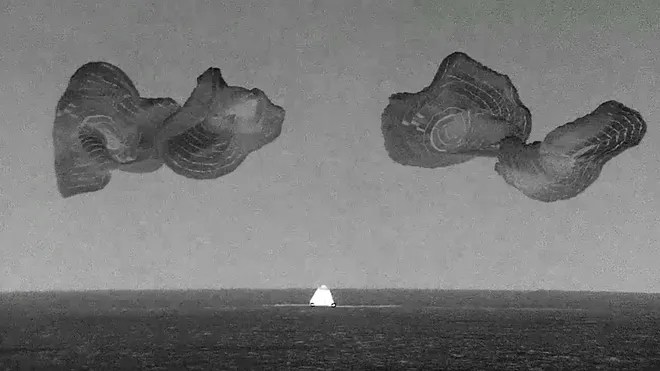
On Sunday, September 15, 2024, a turning point in space exploration and aerospace engineering ended. The astronauts for the first commercial spacewalk landed safely on Earth about 70 miles from the tip of the United States.
Ever since Former President Eisenhower signed the National Aeronautics and Space Act of 1958, space exploration has been advancing. Although it has been exclusive to trained and educated astronauts and engineers. That is until SpaceX’s, and the world’s, first commercial spacewalk with CEO Jared Isaacman, AirForce Pilot Scott “Kidd” Poteet, and two SpaceX engineers, Anna Menon and Sarah Gillis. Along with it being the first privately funded, the crew also went to the highest altitude in Earth’s orbit (870 miles) any human has gone to.
Once the capsule was in place, the commander, Jared Isaacman, and Sarah Gillis left the capsule for the 10-minute spacewalk. During the spacewalk, they completed the usual tests and check-ups on the capsule usually done on a spacewalk. While they were out of the capsule they risked getting “the bends”, which is when nitrogen bubbles form in your bloodstream and is a risk usually experienced by scuba divers. To prevent this, the crew had SpaceX’s EVA suits that had an air tube connected to keep oxygen flowing, remained pressurized, and protected them from the temperatures in outer space (about 454 degrees Fahrenheit).
After their five-day mission to space, the crew entered the most dangerous part of the mission, the return. Once the Capsule reached the thickest part of Earth’s atmosphere, the capsule began the deorbit burn. While the capsule reached temperatures of 3,500 degrees, the crew inside remained safe due to the 13-foot-wide heat shield at the bottom. As the wider side was the leading side in the descent, the Crew Dragon capsule began to slow down, a little later the parachute was deployed to land. Once they hit the ocean near the Dry Tortugas, the rescue crews came to haul the capsule onto the Dragon’s Nest, a specially designed boat for the Crew Dragon. Once on the boat, there were a few final safety checks then the crew was allowed to disembark and prepare for the 70 miles back to dryland.
 The Snapper